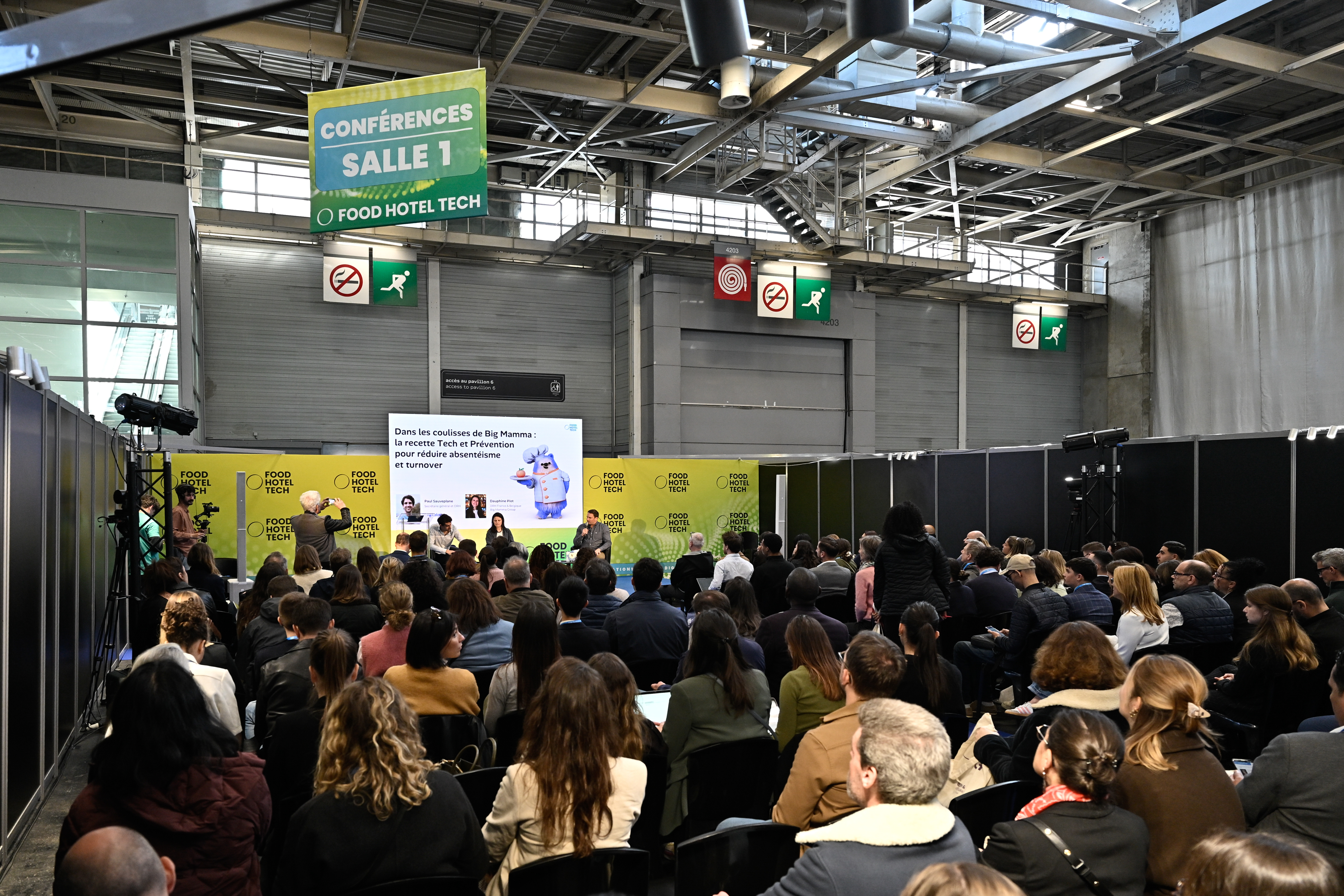
Dans les coulisses de Big Mamma : comment la santé est devenue un levier de performance RH
Recruter, fidéliser, former, faire grandir les équipes… Dans la restauration, les défis RH n'ont jamais été aussi stratégiques. À l'occasion de Food Hotel Tech 2026, Dauphine Piot, Directrice des Ressources Humaines France et Belgique de Big Mamma, est venue partager les coulisses d'un groupe qui emploie aujourd'hui plus de 2 700 collaborateurs en Europe.
Aux côtés de Paul Sauveplane, Secrétaire Général et DRH d'Alan, elle a détaillé comment Big Mamma a progressivement transformé son approche de la santé au travail pour répondre à deux enjeux majeurs du secteur : l'absentéisme et le turnover.
Dans la restauration, la bataille RH se joue sur plusieurs fronts
Pour Dauphine Piot, les défis sont clairement identifiés.
Le premier reste le recrutement. Avec plus de 700 embauches par an sur le seul périmètre français, attirer de nouveaux talents demeure un enjeu quotidien.
Le second concerne la rétention. Si une partie du turnover est structurelle dans la restauration, une autre peut être évitée grâce à une politique RH adaptée.
Le troisième enjeu repose sur le développement des collaborateurs. Chez Big Mamma, cela passe par des parcours d'évolution clairement identifiés et une forte culture de promotion interne. Chaque année, près de 25 % des collaborateurs évoluent vers de nouvelles responsabilités.
Enfin, un quatrième défi s'impose de plus en plus : la santé des équipes.
« La restauration est un métier difficile, à la fois physiquement et mentalement », rappelle la DRH.
Passer d'une logique de réaction à une logique de prévention
Longtemps, la santé en entreprise a été abordée principalement sous l'angle administratif : mutuelle, arrêts de travail, gestion des absences.
Big Mamma a progressivement adopté une approche différente : intervenir avant que les problèmes n'apparaissent.
L'objectif est simple : réduire les risques en amont plutôt que gérer leurs conséquences.
Cette stratégie s'appuie notamment sur des actions de prévention ciblées.
Sur les sujets de santé mentale, les collaborateurs ont accès à des psychologues, y compris dans leur langue maternelle, un point particulièrement important pour une entreprise dont près de 70 % des équipes sont italiennes.
Sur les troubles musculo-squelettiques, particulièrement fréquents dans les métiers de la restauration, des kinésithérapeutes interviennent directement dans les restaurants pour sensibiliser les équipes aux bons gestes et aux échauffements avant le service.
Une approche inspirée du sport de haut niveau.
« Les personnes qui travaillent dans la restauration sont finalement des sportifs », souligne Dauphine Piot.
Quand la technologie libère du temps pour le terrain
Au-delà de la prévention, la digitalisation de nombreux processus RH a également permis aux équipes de se recentrer sur l'humain.
L'automatisation des affiliations des nouveaux collaborateurs à la mutuelle représente à elle seule plusieurs dizaines d'heures économisées chaque année.
Chez Big Mamma, les équipes RH gèrent plus de 700 arrivées par an. Grâce à l'automatisation, près de 65 heures de travail administratif ont pu être réallouées à des missions à plus forte valeur ajoutée.
« Notre objectif est d'être présents sur le terrain, pas derrière un ordinateur », explique la DRH.
Cette logique illustre parfaitement l'un des grands enseignements de Food Hotel Tech : la technologie n'a de sens que lorsqu'elle permet aux équipes de se concentrer sur leur cœur de métier.
Santé et expérience collaborateur : un nouvel outil de fidélisation
Dans un secteur où les tensions sur l'emploi restent fortes, les politiques de santé deviennent également un élément de marque employeur.
Chez Big Mamma, les outils liés à la santé sont désormais présentés dès le recrutement comme un avantage concret offert aux collaborateurs.
L'application utilisée par les équipes affiche un taux d'adoption supérieur à 90 %, un chiffre particulièrement remarquable dans un environnement où les applications RH peinent souvent à s'imposer.
Cette adhésion s'explique notamment par la simplicité des usages : remboursements rapides, accès aux professionnels de santé, contenus de prévention et accompagnement personnalisé.
Réduire l'absentéisme en travaillant sur l'engagement
Pour Dauphine Piot, la lutte contre l'absentéisme ne peut pas se limiter à des outils.
Le véritable levier reste l'engagement des équipes.
Plus les collaborateurs se projettent dans l'entreprise, plus ils se sentent accompagnés et valorisés, moins les absences évitables ont tendance à se multiplier.
Cette logique conduit Big Mamma à suivre de près les indicateurs RH et à responsabiliser les managers sur les coûts réels du turnover et de l'absentéisme.
Car derrière chaque absence de dernière minute se cachent des impacts opérationnels immédiats : surcharge des équipes présentes, recours à des extras, désorganisation des services et hausse des coûts.
Une nouvelle vision de la performance
L'un des messages les plus marquants de cette conférence est sans doute celui-ci : la santé ne doit plus être considérée comme un centre de coûts.
Elle devient progressivement un levier de performance.
Performance opérationnelle, parce qu'elle contribue à réduire l'absentéisme. Performance économique, parce qu'elle limite le turnover. Performance humaine, parce qu'elle améliore l'expérience collaborateur.
À l'heure où les métiers de l'hospitalité font face à des défis de recrutement sans précédent, la capacité à prendre soin de ses équipes apparaît plus que jamais comme un facteur clé de différenciation.
Et dans les coulisses de Big Mamma, cette conviction semble désormais bien installée.